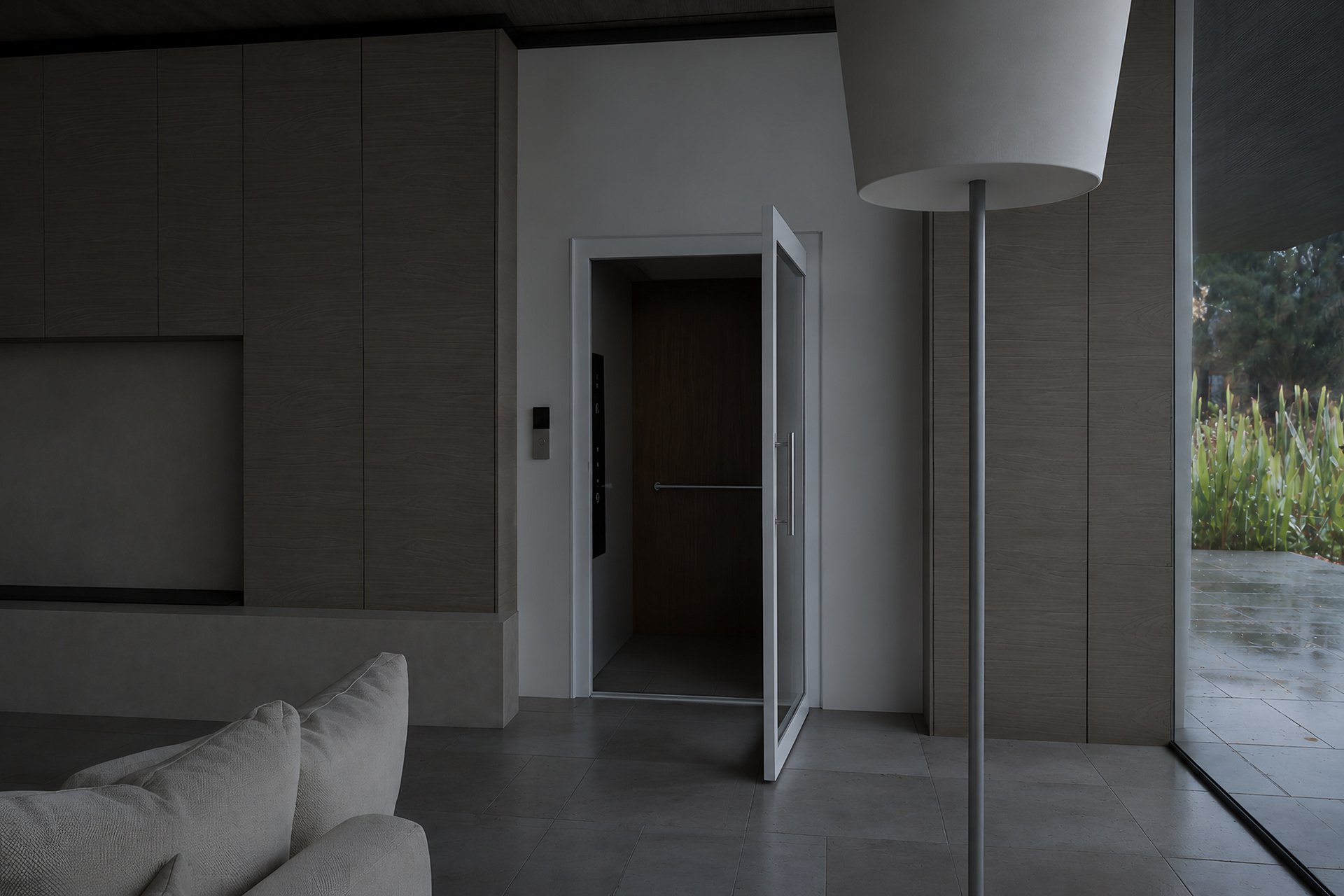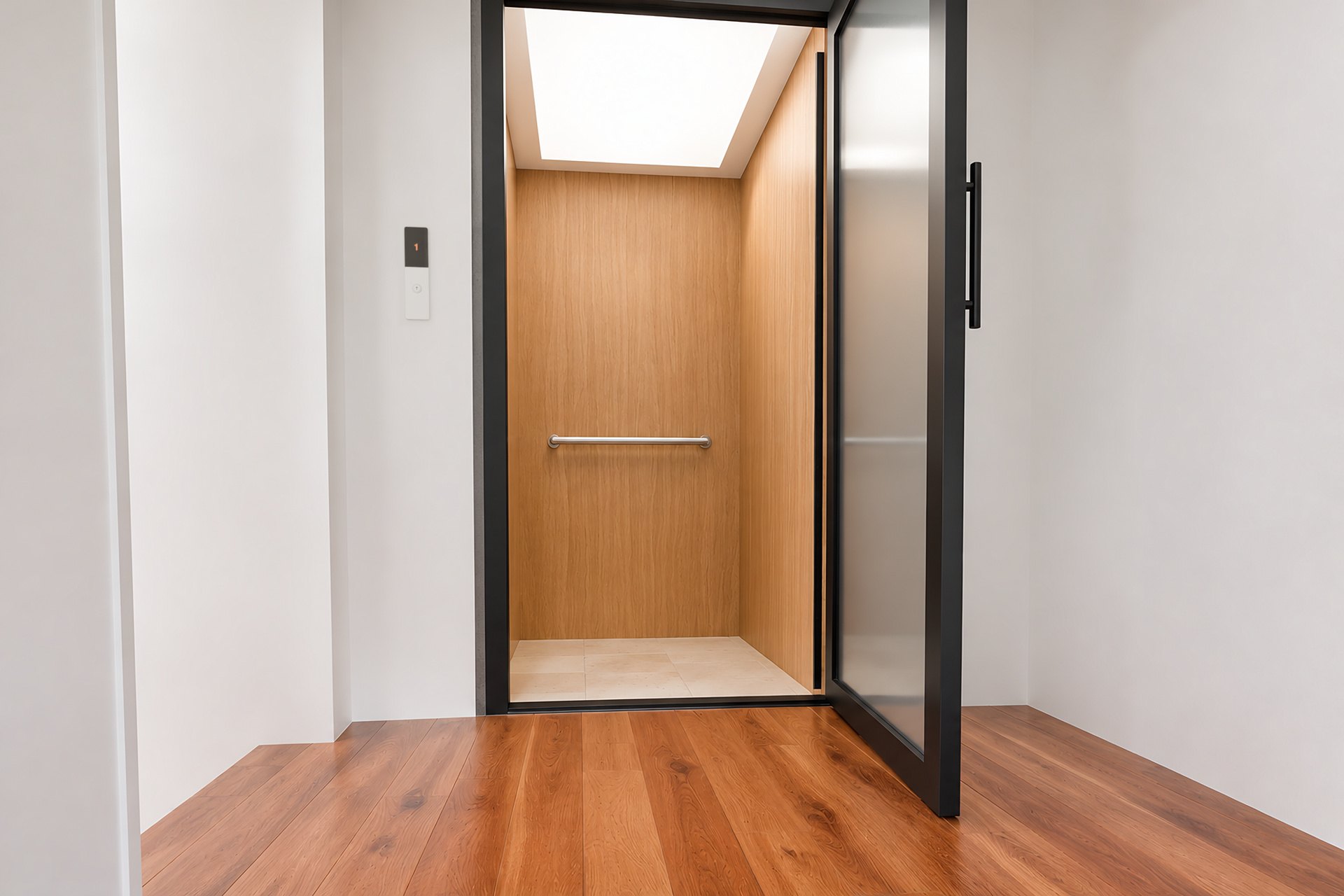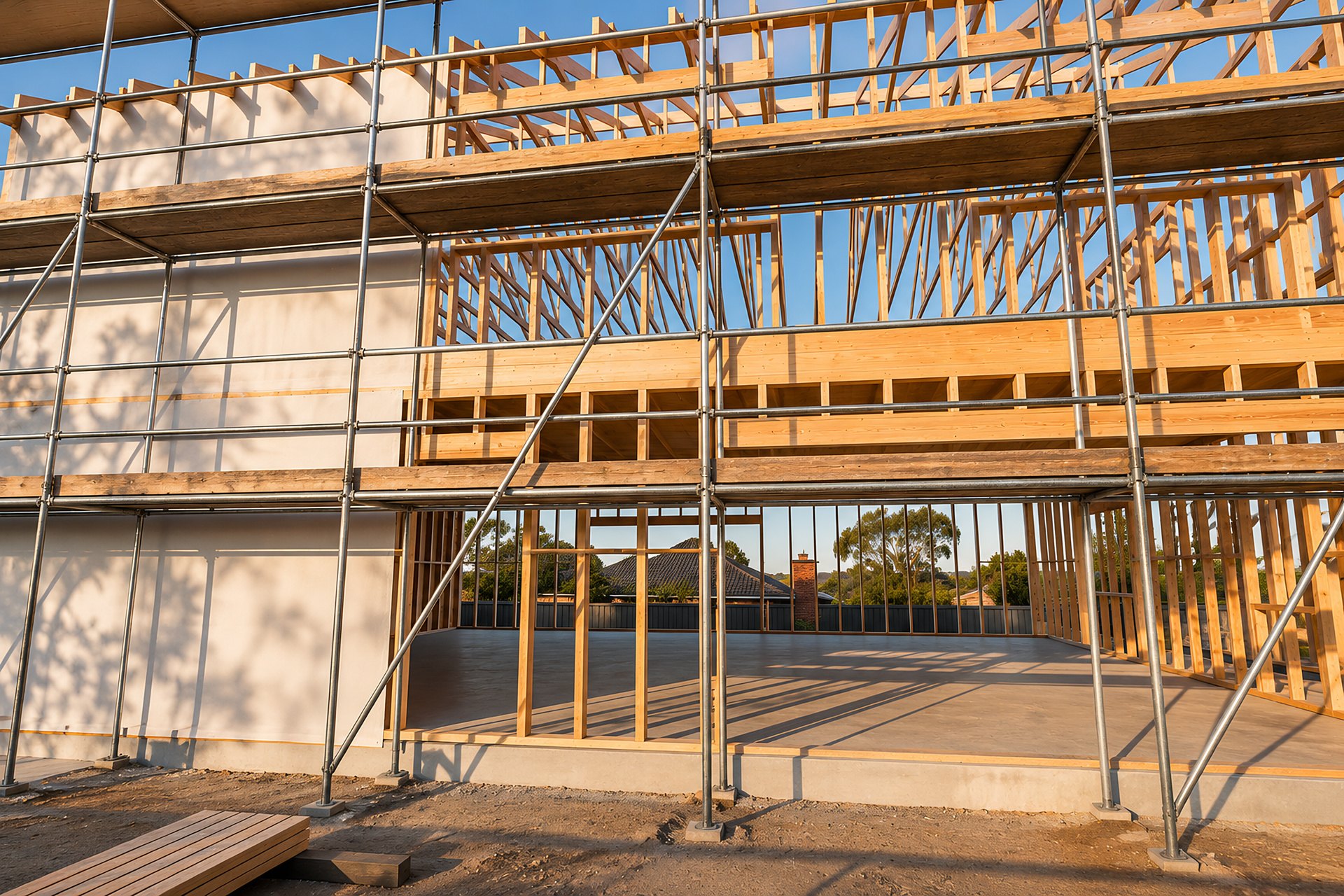
The parts
The power unit
A motor, a pump and a tank of oil, with the valves that control the flow. On the RISE 300 it sits in a cupboard near the lift, so there’s no machine room.
The cylinder
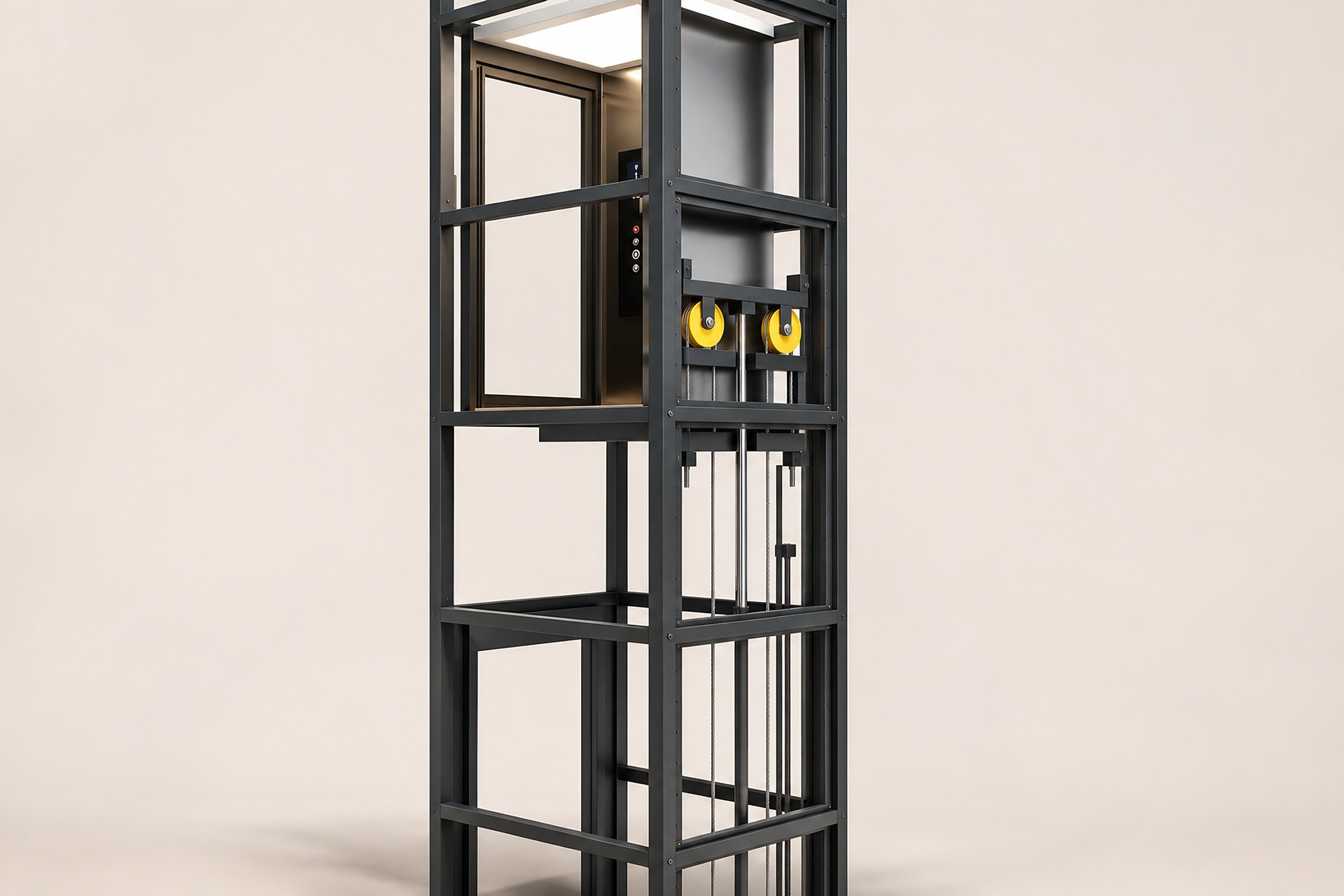
A steel tube standing beside the cabin, with a ram inside it that slides up and down.
The ropes and pulleys
Wire ropes run over two pulleys on top of the ram. One end of each rope is fixed at the foot of the shaft, and the other end holds the cabin.
The rails
Steel guide rails fixed to one wall. The cabin runs on them and they keep it steady all the way up. Part of the assessment is checking that the wall you want them on can take them.
The controller
It decides when to run the pump and when to open the valve, and it starts and stops every journey softly.
Going up
When you press a button, the pump starts and pushes oil into the cylinder. The ram rises and takes the pulleys up with it. The ropes are fixed at the bottom and run over those pulleys to the cabin, so the cabin rises twice as far as the ram. Installers call this 2:1 roping.
Going down
The pump doesn’t run on the way down. A valve opens, the oil flows back to the tank, and the cabin’s own weight brings it down at a controlled speed. That’s also how a RISE 300 can lower on battery power to the lowest landing in a power cut, which we cover in what happens to a home lift in a power cut.
Why 2:1 roping helps
With 2:1 roping, the ram only has to move half the distance the cabin travels, so the cylinder can be much shorter than the trip.
What it means for your house
- There’s no counterweight running in the shaft and no machinery above your ceiling.
- The power unit needs a cupboard near the lift, and we work out where at the assessment.
- The pit is 150 mm, or 50 mm with a ramp into the cabin.
- In a power cut, the cabin lowers on battery to the lowest landing.
- Every journey starts and stops softly.
The parts that wear on a hydraulic lift are the ropes, the seals, the hoses, the oil and the lowering battery. Ask any company how each one is checked and when it gets replaced.
Other kinds of home lift
Home lifts also run on traction (a motor pulling ropes), a screw and nut, vacuum, or cables. Each has its own pit, headroom and servicing needs. Our guide to choosing a home lift company compares five types side by side.