What a RISE 300 does when the power goes
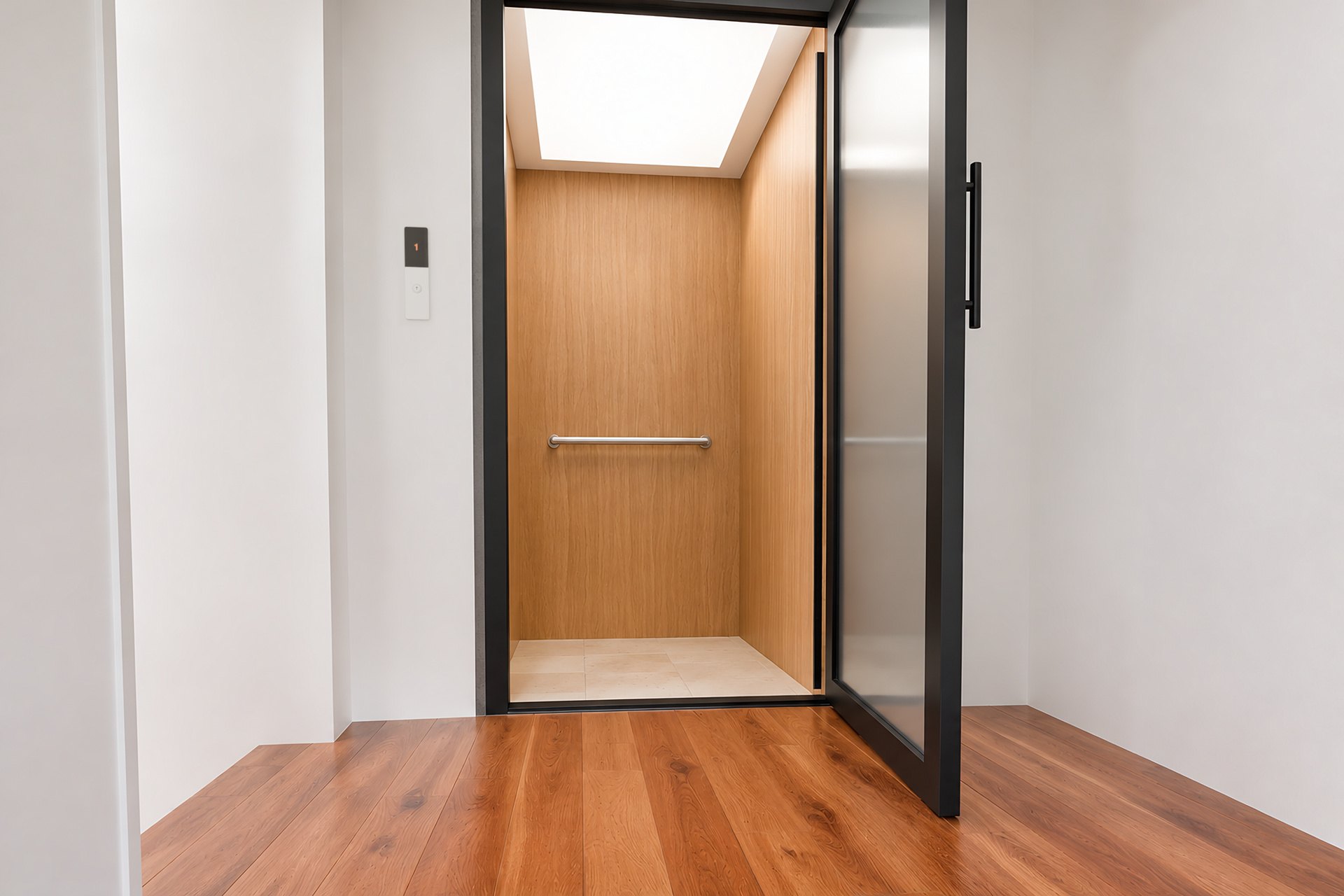
In a power cut, the cabin lowers to the lowest landing on battery power, so you can step out.
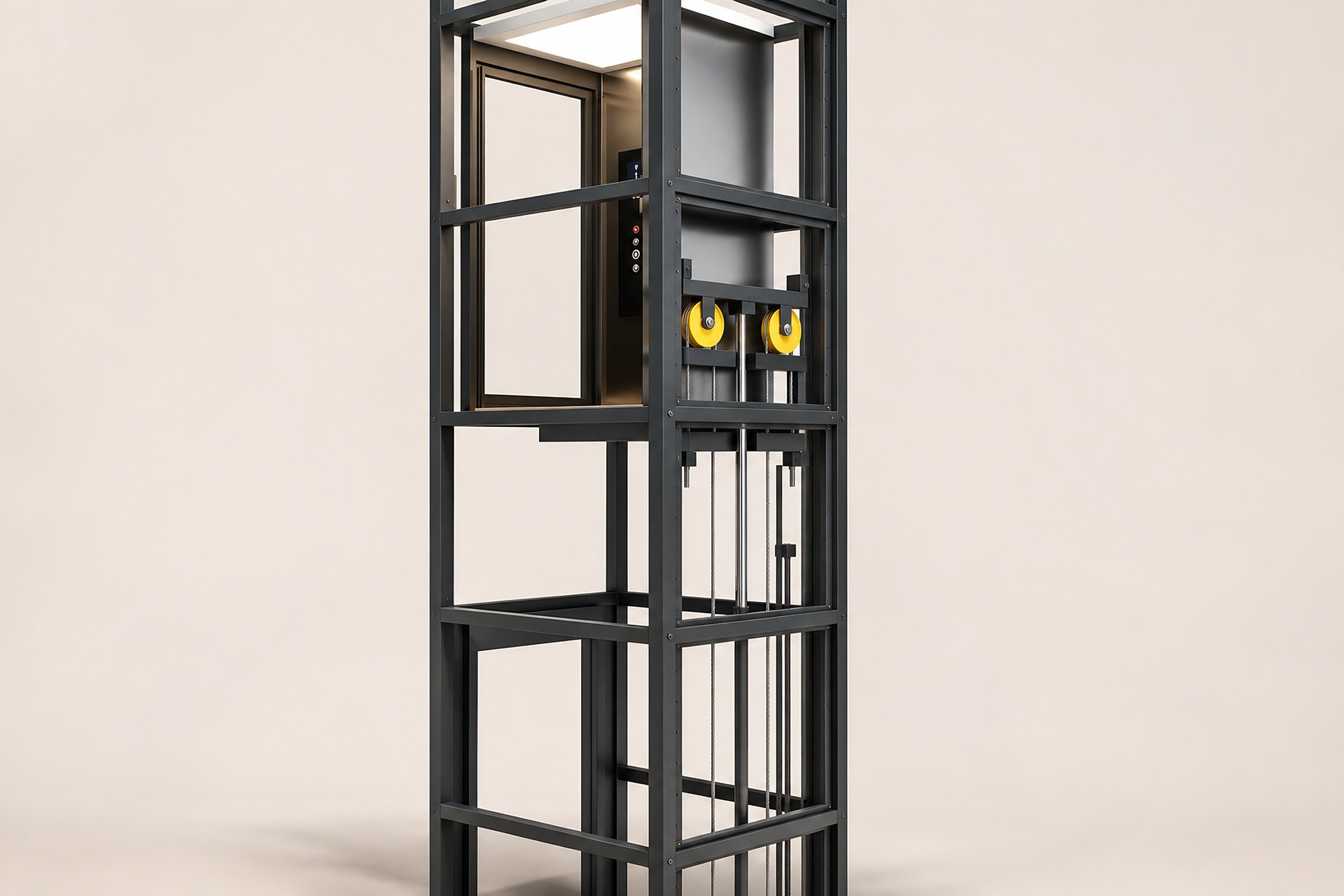
It can do that because of the way a hydraulic lift moves. The pump only runs on the way up. On the way down, a valve lets the oil flow back to its tank and the cabin’s own weight brings it down, which takes far less power than going up. A battery can do it. How a hydraulic home lift works goes through each part.
Know where your lowest landing is
The lowest landing is the lowest floor the lift stops at. In most houses that’s the ground floor. In some it’s a garage or a basement, and that changes your plan, because a blackout could leave you down there with no power and no lights.
If your lowest landing is a garage or basement, check three things before the lift goes in:
- There’s a door from there into the house that you can open by hand.
- There’s a torch or a battery light near the lift.
- Anyone who can’t manage stairs has somewhere to sit and wait until the power is back.
What to ask any lift company before you buy
Every home lift handles a power cut its own way, so ask each company you’re comparing:
- What does the lift do in a power cut, and which floor does it stop at?
- What powers the lowering, and how often is that battery replaced? Batteries wear out, so ask what a new one costs.
- Is the lowering tested at every service?
- If you’re inside when the power goes, how do you call for help? Does the cabin phone work in a blackout, and who answers it?
- Does the lift need a reset when the power comes back, and who does it?
Get the answers in writing. Our page on what a home lift costs to run covers the battery and the cabin phone in the ten-year numbers.
On the day
If you’re in the lift when the power goes, stay put until the cabin stops at the lowest landing, then step out.
If you’re not in it, leave it alone until the power is back. If anything seems wrong once it is, call us on 1300 492 003 before anyone uses it.
Keep the battery healthy
A battery can go flat without you knowing, so it should be tested at every service. With RiseCare, every service visit goes into your lift’s service history, and you can see when the lowering was last checked.